Showing posts with label AI Blog. Show all posts

Thursday, 1 January 2026

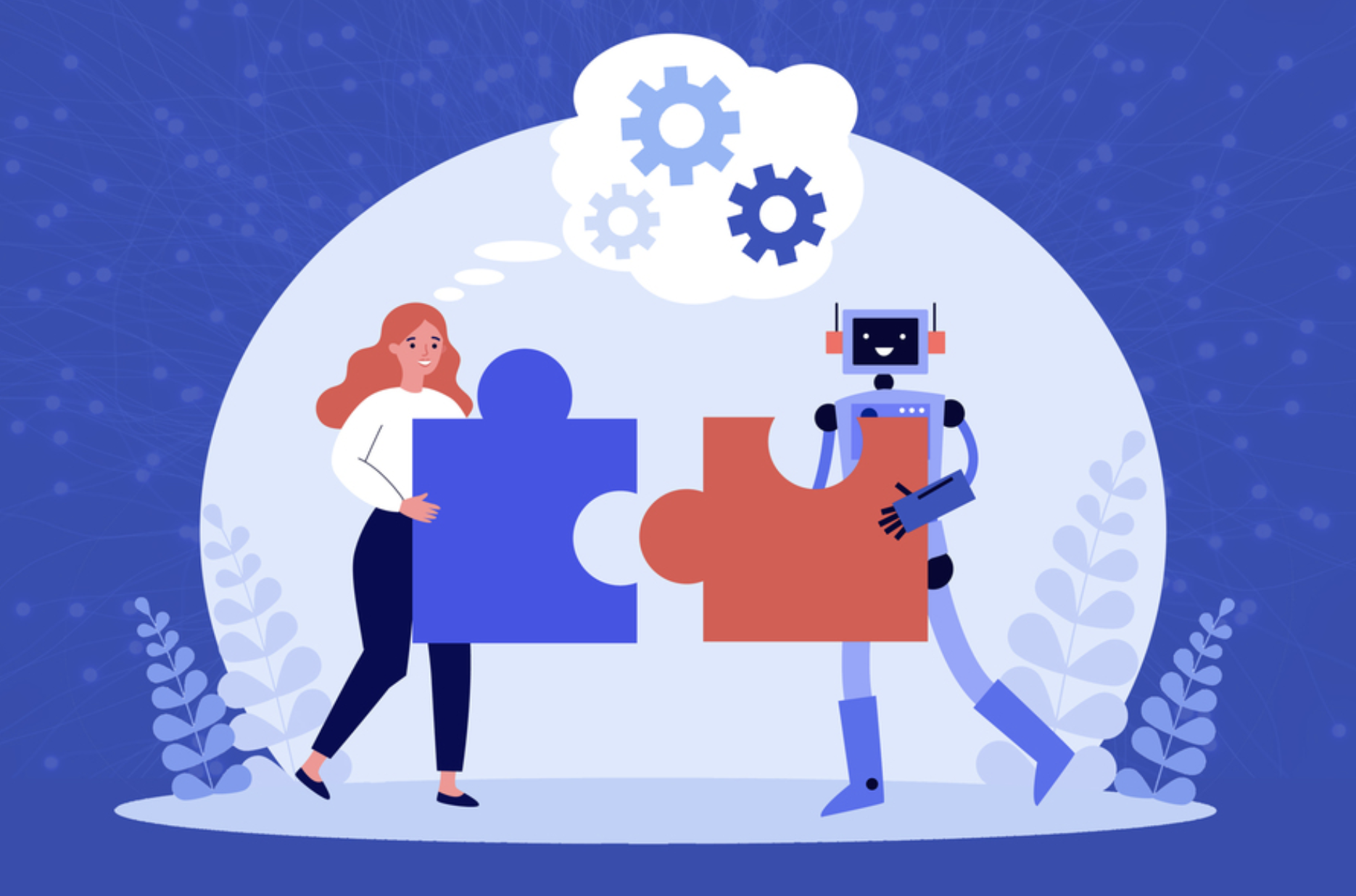
Building Smarter Robots with Small Language Models in Everyday Life

Standard

 🎉 Happy New Year to All My Readers 🎉

I hope this year brings health, learning, growth, and meaningful success to you and your loved ones.

A new year always feels like a clean slate. For technology, it is also a good moment to pause and ask a simple question:

Are we building things that are truly useful in daily life?

This is why I want to start the year by talking about something very practical and underrated
Small Language Models (SLMs) and how they can be used in robotics for everyday use cases in a cost-effective way.

Why We Are Considering Small Language Models (SLMs)

In real-world robotics, the goal is not to build the smartest machine in the world. The goal is to build a machine that works reliably, affordably, and efficiently in everyday environments. This is one of the main reasons we are increasingly considering Small Language Models instead of very large, general-purpose AI models.

Most robotic tasks are well-defined. A robot may need to understand a limited set of voice commands, respond to simple questions, or make basic decisions based on context. Using a massive AI model for such tasks often adds unnecessary complexity, higher costs, and increased latency. Small Language Models are focused by design, which makes them a much better fit for these scenarios.

Another important reason is cost efficiency. Robotics systems already require investment in hardware, sensors, motors, and power management. Adding large AI models on top of this quickly becomes expensive, especially when cloud infrastructure is involved. SLMs can run on edge devices with modest hardware, reducing cloud dependency and making large-scale deployment financially practical.

Reliability and control also play a major role. Smaller models are easier to test, debug, and validate. When a robot behaves unexpectedly, understanding the cause is far simpler when each model has a clearly defined responsibility. This modular approach improves safety and makes systems easier to maintain over time.

Privacy is another strong factor. Many robotics applications operate in homes, hospitals, offices, and factories. Running SLMs locally allows sensitive data such as voice commands or environment context to stay on the device instead of being sent to external servers. This builds trust and aligns better with real-world usage expectations.

Finally, SLMs support a long-term, scalable architecture. Just like microservices in software, individual AI components can be upgraded or replaced without rewriting the entire system. This flexibility is essential as AI technology continues to evolve. It allows teams to innovate steadily rather than rebuilding from scratch every few years.

For robotics in everyday life, intelligence does not need to be massive. It needs to be purpose-driven, efficient, and dependable. Small Language Models offer exactly that balance, which is why they are becoming a key building block in modern robotic systems.

From Big AI Models to Small Useful Intelligence

Most people hear about AI through very large models running in the cloud. They are powerful, but they are also expensive, heavy, and sometimes unnecessary for simple real-world tasks.

In daily robotics use, we usually do not need a model that knows everything in the world.
We need a model that can do one job well.

This is where Small Language Models come in.

SLMs are:

  • Smaller in size
  • Faster to run
  • Cheaper to deploy
  • Easier to control

And most importantly, they are practical.

Thinking of SLMs Like Microservices for AI

An Example architecture of Monolithic vs Microservices used in Software Inductries

In software, we moved from monolithic applications to microservices because:

  • They were easier to maintain
  • Easier to scale
  • Easier to replace

The same idea works beautifully for AI in robotics.


Instead of one huge AI brain, imagine multiple small AI blocks:

  • One model for voice commands
  • One model for intent detection
  • One model for navigation decisions
  • One model for basic conversation

Each SLM does one specific task, just like a microservice.

This makes robotic systems:

  • More reliable
  • Easier to debug
  • More cost-effective
  • Easier to upgrade over time

Everyday Robotics Where SLMs Make Sense

Let us talk about real, everyday examples.

Home Robots

A home assistant robot does not need a giant model.
It needs to:

  • Understand simple voice commands
  • Respond politely
  • Control devices
  • Follow routines

An SLM running locally can do this without sending data to the cloud, improving privacy and reducing cost.

Office and Workplace Robots

In offices, robots can:

  • Guide visitors
  • Answer FAQs
  • Deliver items
  • Monitor basic conditions

Here, SLMs can handle:

  • Limited vocabulary
  • Context-based responses
  • Task-oriented conversations

No heavy infrastructure needed.

Industrial and Warehouse Robots

Industrial robots already know how to move.
What they lack is contextual intelligence.

SLMs can help robots:

  • Understand instructions from operators
  • Report issues in natural language
  • Decide next actions based on simple rules plus learning

This improves efficiency without increasing system complexity.

Healthcare and Assistance Robots

In hospitals or elderly care:

  • Robots need predictable behavior
  • Fast response
  • Offline reliability

SLMs can be trained only on medical workflows or assistance tasks, making them safer and more reliable than general-purpose AI.

Why SLMs Are Cost-Effective

This approach reduces cost in multiple ways:

  • Smaller models mean lower hardware requirements
  • Edge deployment reduces cloud usage
  • Focused training reduces development time
  • Modular design avoids full system rewrites

For startups, researchers, and even individual developers, this makes robotics accessible, not intimidating.

The Bigger Picture

The future of robotics is not about giving robots human-level intelligence. It is about giving them just enough intelligence to help humans better.

SLMs enable exactly that.

They allow us to build robots that:

  • Are useful
  • Are affordable
  • Are trustworthy
  • Work in real environments

A New Year Thought

As we step into this new year, let us focus less on building the biggest AI and more on building the right AI.

  • Small models.
  • Clear purpose.
  • Real impact.

Happy New Year once again to all my readers 🌟
Let us focus on building technology that serves people locally and globally, addresses real-world problems, and creates a positive impact on society.

Bibliography

  • OpenAI – Advances in Language Models and Practical AI Applications
  • Used as a reference for understanding how modern language models are designed and applied in real-world systems.
  • Google AI Blog – On-Device and Edge AI for Intelligent Systems
  • Referenced for insights into running AI models efficiently on edge devices and embedded systems.
  • Hugging Face Documentation – Small and Efficient Language Models
  • Used to understand lightweight language models, fine-tuning techniques, and deployment strategies.
  • NVIDIA Developer Blog – AI for Robotics and Autonomous Systems
  • Referenced for practical use cases of AI in robotics, including perception, navigation, and decision-making.
  • MIT Technology Review – The Rise of Practical AI in Robotics
  • Used for broader industry perspectives on how AI is shifting from experimental to everyday applications.
  • Robotics and Automation Magazine (IEEE) – Trends in Modern Robotics Systems
  • Referenced for understanding modular robotics architectures and intelligent control systems.
  • Personal Industry Experience and Hands-on Projects
  • Insights based on real-world development, experimentation, and system design experience in AI-driven applications.

Wednesday, 31 December 2025

The Year Technology Felt More Human : Looking Back at 2025

Standard

Image

As this year comes to an end, there is a quiet feeling in the air.
Not excitement. Not hype.
Just reflection.

On start of 2025 felt like a year of dramatic announcements, AI bubbles or shocking inventions. Later, it felt like a year where technology finally settled down and started doing its job properly.

Shifted From More Noise to Less noise.
More Tech Gussips to More usefulness.

When Bigger Stopped Meaning Better

For a long time, the tech world believed that bigger was always better.
Bigger models. Bigger systems. Bigger promises.

But somewhere along the way in 2025, many of us realized something simple.
Most real-world problems do not need massive intelligence.
They need focused intelligence.

This is the year when smaller, purpose-built AI quietly proved its value.
Not by impressing us, but by working reliably in the background.

Technology Moved Closer to Real Life

Image

Another thing that stood out this year was where technology lives.

AI slowly moved away from distant servers and closer to people:

  • Inside devices
  • Inside machines
  • Inside everyday tools

This made technology feel less abstract and more personal.
Faster responses. Better privacy. Less dependency.

It started to feel like technology was finally meeting people where they are.

Robots Became Less Impressive and More Helpful

In earlier years, robots were exciting because they looked futuristic.
In 2025, robots mattered because they were useful.

Helping in hospitals.
Supporting workers.
Assisting at home.

They were not trying to be human.
They were simply trying to be helpful.

And that made all the difference.

Builders Changed Their Mindset

Something else changed quietly this year
The mindset of people building technology.

There was more talk about:

  • Responsibility
  • Simplicity
  • Long-term impact

Less about chasing trends.
More about solving actual problems.

Developers stopped asking
“What is the latest technology?”

And started asking
“What is the right solution?”

Sustainability Finally Felt Real

2025 was also the year sustainability stopped being just a slide in presentations.

Efficiency mattered.
Energy use mattered.
Running smarter mattered more than running bigger.

Technology began respecting limits and that felt like progress.

What This Year Taught Me

If there is one thing 2025 taught us, it is this
Technology does not need to be loud to be powerful.

The best inventions of this year did not demand attention.
They earned trust.

They worked quietly.
They reduced friction.
They helped people live and work a little better.

A Simple Thought Before the Year Ends

As we step into a new year, I hope we carry this mindset forward.

Let us build technology that truly serves people locally and globally,
solves real-world problems,
and positively impacts everyday life.

No noise.
No unnecessary complexity.
Just thoughtful building.

Happy New Year in Advance to everyone reading this 🌟
Let us keep creating things that matter.

Image Links Reference used in this blog topic

Friday, 21 November 2025

TOON: The Future of Structured Data for AI - A Simpler, Lighter, Human-Friendly Alternative to JSON

Standard


For more than a decade, JSON has been the backbone of web APIs. It’s everywhere powering apps, microservices, logs, configs, and data pipelines. But as we enter a world dominated by AI agents, LLM workflows, and token-optimized prompts, JSON is starting to show its age.

Today’s AI systems don’t just consume data ; they interpret it, reason with it, and generate new structures from it.

Yet JSON, with its endless braces, commas, and quotes, wasn’t built for that kind of work.

So a new idea has emerged:

TOON : Token-Oriented Object Notation

A compact, human-readable, AI-friendly alternative to JSON that reduces token cost, improves model understanding, and simplifies structured prompt design.

And honestly?
It’s one of the most refreshing innovations in AI tooling I’ve seen in years.

The Problem with JSON in AI Workflows

Let’s be fair JSON is excellent for machines.
But for humans designing structured prompts, tool schemas, agent configs, and reasoning structures, JSON becomes:

  • Too verbose
  • Hard to read
  • Token-inefficient
  • Not friendly for mixing text + structure + examples
  • Difficult to reference or reuse

Consider this: every {, ", :, and , you include in JSON becomes a token when passed to a language model. That is wasted budget, wasted context window, and wasted clarity.

The freeCodeCamp article puts it elegantly:

“JSON’s punctuation and quotes create unnecessary token bloat that doesn’t help the model understand your structure.”

And when your prompts or agent configs grow into the hundreds of lines, you feel that bloat.

Which brings us to…

Enter TOON: Token-Oriented Object Notation

TOON is a new notation format designed precisely for AI systems especially LLMs. It aims to solve JSON’s weaknesses while keeping the same underlying data model.

According to the official TOON GitHub repository:

“TOON is a compact, human-readable encoding of the JSON data model designed for LLM prompts. It provides a lossless serialization of objects, arrays, and primitives but with far fewer tokens.”

So you get the best of both worlds:

  • JSON compatibility
  • Human-friendly syntax
  • LLM-optimized token efficiency

It’s like someone finally said:
“What if structured data didn’t have to look like a programming parse tree?”

TOON vs JSON: A Side-by-Side Look

JSON Example

{
  "users": [
    { "id": 1, "name": "Alice", "role": "admin" },
    { "id": 2, "name": "Bob", "role": "user" }
  ]
}

TOON Equivalent

users[2]{id,name,role}:
  1,Alice,admin
  2,Bob,user

Immediately you notice:

✔ No quotes
✔ No braces
✔ No commas between fields
✔ Cleaner structure
✔ Fewer tokens
✔ Easier for both humans and LLMs to interpret

This is the magic of TOON.

TOON is Not Just YAML or a Shorthand - It’s Purpose-Built for AI

People might ask:
“Is TOON just another YAML or HCL?”

Not at all.

TOON is designed with 3 AI-specific goals:

1. Minimize Token Count

JSON forces every key and value into quotes, every object into {}, and every list into [].
TOON eliminates most of that.

Why this matters:

  • LLM context windows are limited
  • Token cost affects your bill
  • Structured prompts can get huge (tool definitions, agent descriptions, memory, etc.)

TOON often reduces token usage by 30–60%, according to early tests.

2. Improve Model Parsing & Predictability

Models don’t “see” braces and commas the way developers do. They see tokens.

TOON’s cleaner syntax helps models:

  • Parse structure more reliably
  • Respect fields more consistently
  • Follow templates more accurately

This is especially useful for:

  • Function calling
  • Structured output enforcement
  • Agent workflows
  • Multi-turn reasoning setups

3. Make Prompts and Schemas Human-Readable

TOON is designed for the people actually building AI systems:

  • Prompt engineers
  • Data scientists
  • Product teams
  • LLM app developers
  • Multi-agent workflow designers

You can read TOON like a clean, modern DSL.

A Real-World Example: Defining Tools and Agents in TOON

JSON Tool Definition

{
  "name": "get_weather",
  "description": "Fetch weather by city name",
  "schema": {
    "type": "object",
    "properties": {
      "city": { "type": "string" }
    },
    "required": ["city"]
  }
}

TOON Equivalent

tool get_weather:
  description: Fetch weather by city name
  args{city:string!}

That’s it.

  • Cleaner
  • Easier to edit
  • Far fewer tokens
  • Still maps 1:1 to JSON

TOON Supports Deep Structures Too

JSON:

{
  "article": {
    "title": "AI in 2025",
    "tags": ["ai", "future", "trends"],
    "author": {
      "name": "Ravi",
      "followers": 5000
    }
  }
}

TOON:

article:
  title: AI in 2025
  tags[3]: ai,future,trends
  author:
    name: Ravi
    followers: 5000

It looks like a hybrid of:

  • JSON’s structure
  • CSV’s compactness
  • YAML’s simplicity

But behaves like token-optimized JSON under the hood.

Developer Experience: Using TOON in Your Apps

The official GitHub repo provides SDKs for:

✔ TypeScript / JavaScript

npm install @toon-format/toon

✔ Python

pip install python-toon

Convert JSON → TOON (CLI)

npx @toon-format/cli input.json -o output.toon

Convert TOON → JSON

npx @toon-format/cli input.toon -o output.json

You can integrate TOON anywhere you are already using:

  • JSON configs
  • AI prompts
  • LLM tool schemas
  • Agent definitions
  • Structured output templates

Where TOON Really Shines

1. AI tool calling

Cleaner schemas, fewer tokens, better consistency.

2. Multi-agent ecosystems

Easier to define agent roles, memory, context, and routing rules.

3. RAG pipelines

Structured metadata is more readable and cheaper to embed.

4. Workflow orchestration

Tasks, edges, and dependencies look like a proper DSL instead of a JSON jungle.

5. Prompt engineering at scale

Prompts become easier to maintain, version, document, and share.

Limitations of TOON (Honest Assessment)

The GitHub repo outlines some limitations:

  • Extremely irregular JSON might not compress well
  • Round-trip conversion should be tested for edge cases
  • JSON remains better for general web API interoperability
  • Tools and libraries are still maturing

TOON is not a replacement for JSON everywhere, it is a better tool for AI-specific use cases.

Final Thought: TOON is JSON for the AI Era

AI changes how we think about data.

And TOON feels like the first serialization format truly designed for the LLM age where:

  • Human readability
  • Token efficiency
  • Structured reasoning
  • Model-friendliness

…all matter just as much as machine parsing.

TOON is not a buzzword, it’s a practical, elegant evolution in how we express structured information to AI systems.

If you work with prompts, agents, or structured LLM outputs, TOON will feel like a breath of fresh air i.e  simple, compact, powerful.

Bibliography


Friday, 24 October 2025

How a New “AI Language” Could Solve the Context Limit Problem in AI Development

Standard

Language models are improving rapidly and large context windows are becoming a reality, but many teams still run into the same persistent problem: when your data and prompt grow, model performance often drops, latency increases, and costs add up. Longer context alone isn’t the full solution.

What if instead of simply adding more tokens, we invented a new kind of language i.e. a language designed for context, memory, and retrieval that gives models clear instructions about what to remember, where to search, how to reference information, and when to drop old data

Call it an “AI Language,” a tool that sits between your application logic and the model, helping bring structure and policy into conversation.

Why Longer Context Isn’t Enough

Even as models begin to handle hundreds of thousands of tokens, you’ll still see issues:

  • Real-world documents and tasks are messy, so throwing large context blocks at a model doesn’t always maintain coherence.
  • The computational cost of processing huge blocks of text is non-trivial: more tokens means more memory, higher latency, and greater costs.
  • Many interactive systems require memory across sessions, where simply adding history to the prompt isn’t effective.
  • Researchers are actively looking at efficient architectures that can support long form reasoning (for instance linear-time models) rather than brute-forcing token length.

What a Purpose-Built AI Language Might Do

Imagine an application that uses a custom language for managing context and memory alongside the model. Such a language might include:

  • Context contracts, where you specify exactly what the model must see, may see, and must not see.
  • Retrieval and memory operators, which let the system ask questions like “what relevant incidents happened recently” or “search these repos for the phrase ‘refund workflow’” before calling the model.
  • Provenance and citation rules, which require that any claims or answers include source references or fallback messages when sources aren’t sufficient.
  • Governance rules written in code, such as privacy checks, masking of sensitive fields, and audit logs.
  • Planning primitives, so the system divides complex work into steps: retrieve → plan → generate → verify, instead of dumping all tasks into one big prompt.

How It Would Work

In practice, this new AI Language would compile or interpret into a runtime that integrates:

  • A pipeline of retrieval, caching, and memory access, fed into the model rather than simply dumping raw text.
  • Episodic memory (what happened and when) alongside semantic memories (what it means), so the system remembers across sessions.
  • Efficient model back-ends that might use specialized sequence architectures or approximations when context is huge.
  • A verification loop: if the sources are weak or policy violations appear, escalate or re-retrieve rather than just generate output.

What Problems It Solves

Such a system addresses key pain points:

  • It prevents “context bloat” by intentionally selecting what to show the model and why.
  • It improves latency and cost because retrieval is planned and cached rather than one giant prompt every time.
  • It helps avoid hallucinations by forcing the requirement for citations or clear fallback statements.
  • It provides durable memory rather than dumping everything into each prompt i.e. very useful for long-running workflows.
  • It embeds governance (privacy, retention, redaction) directly into the logic of how context is built and used.

What Happens If We Don’t Build It

Without this kind of structured approach:

  • Teams keep stacking longer prompts until quality plateaus or worsens.
  • Every application rebuilds its own retrieval or memory logic, scattered and inconsistent.
  • Answers remain unverifiable, making it hard to audit or trust large-scale deployments.
  • Costs rise as brute-force prompting becomes the default rather than optimized context management.
  • Compliance and policy come last-minute rather than being integrated from day one.

The Big Challenges

Even if you design an AI Language today, you’ll face hurdles:

  • Getting different systems and vendors to agree on standards (operators, memory formats, citation schemas).
  • Ensuring safety: retrieval systems and memory layers are new attack surfaces for data leaks or prompt injection.
  • Making it easier than just writing a huge prompt so adoption is practical.
  • Creating benchmarks that measure real-world workflows rather than toy tasks.
  • Supporting a variety of model architectures underneath transformers, SSMs, future hybrids.

How to Start Building

If you’re working on this now, consider:

  • Treating context as structured programming, not just text concatenation.
  • Requiring evidence or citations on outputs in high-risk areas.
  • Layering memory systems (episodic + semantic) with clear retention and access rules.
  • Favoring retrieval-then-generate workflows instead of maxing tokens.
  • Tracking new efficient model architectures that handle long contexts without blowing up costs.

Longer context windows help, but the next breakthrough may come from a declarative language for managing context, memory, retrieval, and governance. That kind of language doesn’t just let models read more but also it helps them remember smarter, cite reliably, and work efficiently.

In an era where models are powerful but context–management remains messy, building tools for context is the next frontier of AI development.

Bibliography 

  • Anthropic. (2024). Introducing Claude with a 1M token context window. Anthropic Research Blog. Retrieved from https://www.anthropic.com
  • Bubeck, S., & Chandrasekaran, V. (2024). Frontiers of large language models: Context length and reasoning limits. Microsoft Research.
  • Dao, T., Fu, D., Ermon, S., Rudra, A., & Ré, C. (2023). FlashAttention: Fast and memory-efficient exact attention with IO-awareness. Proceedings of NeurIPS 2023.
  • Gao, L., & Xiong, W. (2023). Long-context language models and retrieval-augmented generation. arXiv preprint arXiv:2312.05644.
  • Google DeepMind. (2024). Gemini 1.5 technical report: Long context reasoning and multimodal performance. Retrieved from https://deepmind.google
  • Hernandez, D., Brown, T., & Clark, J. (2023). Scaling laws and limits of large language models. OpenAI Research Blog.
  • Khandelwal, U., Fan, A., Jurafsky, D., & Zettlemoyer, L. (2021). Nearest neighbor language models. Transactions of the ACL, 9, 109–124.
  • McKinsey & Company. (2024). The business value of AI memory and context management in enterprise systems. McKinsey Insights Report.
  • Peng, H., Dao, T., Lee, T., et al. (2024). Mamba: Linear-time sequence modeling with selective state spaces. arXiv preprint arXiv:2312.00752.
  • Rae, J. W., Borgeaud, S., et al. (2022). Scaling knowledge and context in large models. Nature Machine Intelligence, 4(12), 1205–1215.
  • OpenAI. (2024). GPT-4.1 Technical Overview: Extended context and reasoning performance. Retrieved from https://openai.com/research
  • Stanford HAI. (2024). The future of AI context: Managing memory, retrieval, and reasoning. Stanford University, Human-Centered AI Initiative.

Tuesday, 16 September 2025

The Data Engines Driving RAG, CAG, and KAG

Standard


AI augmentation doesn’t work without the right databases and data infrastructure. Each approach (RAG, CAG, KAG) relies on different types of databases to make information accessible, reliable, and actionable.

RAG – Retrieval-Augmented Generation

Databases commonly used

  • Pinecone Vector Database | Cloud SaaS | Proprietary license
  • Weaviate Vector Database | v1.26+ | Apache 2.0 License
  • MilvusVector Database | v2.4+ | Apache 2.0 License
  • FAISS (Meta AI)Vector Store Library | v1.8+ | MIT License

How it works:

  • Stores text, documents, or embeddings in a vector database.
  • AI retrieves the most relevant chunks during a query.

Real-World Examples & Applications

  • Perplexity AI Uses retrieval pipelines over web-scale data.
  • ChatGPT Enterprise with RAGConnects company knowledge bases like Confluence, Slack, Google Drive.
  • Thomson Reuters LegalUses RAG pipelines to deliver compliance-ready legal insights.

CAG – Context-Augmented Generation

Databases commonly used

  • PostgreSQL / MySQL Relational DBs for session history | Open Source (Postgres: PostgreSQL License, MySQL: GPLv2 with exceptions)
  • Redis In-Memory DB for context caching | v7.2+ | BSD 3-Clause License
  • MongoDB AtlasDocument DB for user/session data | Server-Side Public License (SSPL)
  • ChromaDBContextual vector store | v0.5+ | Apache 2.0 License

How it works:

  • Stores user session history, preferences, and metadata.
  • AI retrieves this contextual data before generating a response.

Real-World Examples & Applications

  • Notion AIReads project databases (PostgreSQL + Redis caching).
  • Duolingo MaxUses MongoDB-like stores for learner history to adapt lessons.
  • GitHub Copilot Context layer powered by user repo data + embeddings.
  • Customer Support AI AgentsRedis + MongoDB for multi-session conversations.

KAG – Knowledge-Augmented Generation

Databases commonly used

  • Neo4j Graph Database | v5.x | GPLv3 / Commercial License
  • TigerGraphEnterprise Graph DB | Proprietary
  • ArangoDBMulti-Model DB (Graph + Doc) | v3.11+ | Apache 2.0 License
  • Amazon Neptune Managed Graph DB | AWS Proprietary
  • Wikidata / RDF Triple Stores (Blazegraph, Virtuoso) Knowledge graph databases | Open Data License

How it works:

  • Uses knowledge graphs (nodes + edges) to store structured relationships.
  • AI queries these graphs to provide factual, reasoning-based answers.

Real-World Examples & Applications

  • Google’s Bard Uses Google’s Knowledge Graph (billions of triples).
  • Siemens Digital Twins Neo4j knowledge graph powering industrial asset reasoning.
  • AstraZeneca Drug DiscoveryNeo4j + custom biomedical KGs for linking genes, proteins, and molecules.
  • JP Morgan Risk Engine Uses proprietary graph DB for compliance reporting.

Summary Table

Approach Database Types Providers / Examples License Real-World Use
RAG Vector DBs Pinecone (Proprietary), Weaviate (Apache 2.0), Milvus (Apache 2.0), FAISS (MIT) Mixed Perplexity AI, ChatGPT Enterprise, Thomson Reuters
CAG Relational / In-Memory / NoSQL PostgreSQL (Open), MySQL (GPLv2), Redis (BSD), MongoDB Atlas (SSPL), ChromaDB (Apache 2.0) Mixed Notion AI, Duolingo Max, GitHub Copilot
KAG Graph / Knowledge DBs Neo4j (GPLv3/Commercial), TigerGraph (Proprietary), ArangoDB (Apache 2.0), Amazon Neptune (AWS), Wikidata (Open) Mixed Google Bard, Siemens Digital Twin, AstraZeneca, JP Morgan


Bibliography

  • Pinecone. (2024). Pinecone Vector Database Documentation. Pinecone Systems. Retrieved from https://www.pinecone.io
  • Weaviate. (2024). Weaviate: Open-source vector database. Weaviate Docs. Retrieved from https://weaviate.io
  • Milvus. (2024). Milvus: Vector Database for AI. Zilliz. Retrieved from https://milvus.io
  • Johnson, J., Douze, M., & Jégou, H. (2019). Billion-scale similarity search with GPUs. FAISS. Meta AI Research. Retrieved from https://faiss.ai
  • PostgreSQL Global Development Group. (2024). PostgreSQL 16 Documentation. Retrieved from https://www.postgresql.org
  • Redis Inc. (2024). Redis: In-memory data store. Redis Documentation. Retrieved from https://redis.io
  • MongoDB Inc. (2024). MongoDB Atlas Documentation. Retrieved from https://www.mongodb.com
  • Neo4j Inc. (2024). Neo4j Graph Database Platform. Neo4j Documentation. Retrieved from https://neo4j.com
  • Amazon Web Services. (2024). Amazon Neptune Documentation. AWS. Retrieved from https://aws.amazon.com/neptune
  • Wikimedia Foundation. (2024). Wikidata: A Free Knowledge Base. Retrieved from https://www.wikidata.org

Monday, 15 September 2025

RAG vs CAG vs KAG: The Future of Smarter AI

Standard

Artificial Intelligence is evolving at a breathtaking pace. But let’s be honest on its own, even the smartest AI sometimes gets things wrong. It may sound confident but still miss the mark, or give you outdated information.

That’s why researchers have been working on ways to “augment” AI to make it not just smarter, but more reliable, more personal, and more accurate. Three exciting approaches are leading this movement:

  • RAG (Retrieval-Augmented Generation)
  • CAG (Context-Augmented Generation)
  • KAG (Knowledge-Augmented Generation)

Think of them as three different superpowers that can be added to AI. Each solves a different problem, and together they’re transforming how we interact with technology.

Let’s dive into each step by step.

1. RAG – Retrieval-Augmented Generation

Imagine having a friend who doesn’t just answer from memory, but also quickly Googles the latest facts before speaking. That’s RAG in a nutshell.

RAG connects AI models to external sources of knowledge like the web, research papers, or company databases. Instead of relying only on what the AI “learned” during training, it retrieves the latest, most relevant documents, then generates a response using that information.

Example:
You ask, “What are Stellantis’ electric vehicle plans for 2025?”
A RAG-powered AI doesn’t guess—it scans the latest news, press releases, and reports, then gives you an answer that’s fresh and reliable.

Where it’s used today:

  • Perplexity AI an AI-powered search engine that finds documents, then explains them in plain English.
  • ChatGPT with browsingfetching real-time web data to keep answers up-to-date.
  • Legal assistantspulling the latest compliance and case law before giving lawyers a draft report.
  • Healthcare trials (UK NHS)doctors use RAG bots to check patient data against current research.

👉 Best for: chatbots, customer support, research assistants—anywhere freshness and accuracy matter.

2. CAG – Context-Augmented Generation

Now imagine a friend who remembers all your past conversations. They know your habits, your preferences, and even where you left off yesterday. That’s what CAG does.

CAG enriches AI with context i.e. your previous chats, your project details, your personal data, so it can respond in a way that feels tailored just for you.

Example:
You ask, “What’s the next step in my project?”
A CAG-powered AI recalls your earlier project details, your goals, and even the timeline you set. Instead of a generic response, it gives you your next step, personalized to your journey.

Where it’s used today:

  • Notion AIdrafts project updates by reading your workspace context.
  • GitHub Copilotsuggests code that fits your current project, not just random snippets.
  • Duolingo Max adapts lessons to your mistakes, helping you master weak areas.
  • Customer support agents remembering your last conversation so you don’t have to repeat yourself.

👉 Best for: personal AI assistants, adaptive learning tools, productivity copilots where personalization creates real value.

3. KAG – Knowledge-Augmented Generation

Finally, imagine a friend who doesn’t just Google or remember your past but has access to a giant encyclopedia of well-structured knowledge. They can reason over it, connect the dots, and give answers that are both precise and deeply factual. That’s KAG.

KAG connects AI with structured knowledge bases or graphs—think Wikidata, enterprise databases, or biomedical ontologies. It ensures that AI responses are not just fluent, but grounded in facts.

Example:
You ask, “List all Stellantis electric cars, grouped by battery type.”
A KAG-powered AI doesn’t just summarize articles—it queries a structured database, organizes the info, and delivers a neat, factual answer.

Where it’s used today:

  • Siemens & GE running digital twins of machines, where KAG ensures accurate maintenance schedules.
  • AstraZenecausing knowledge graphs to discover new drug molecules.
  • Google Bardpowered by Google’s Knowledge Graph to keep facts accurate.
  • JP Morgan generating compliance reports by reasoning over structured financial data.

👉 Best for: enterprise search, compliance, analytics, and high-stakes domains like healthcare and finance.

Quick Comparison

Approach How It Works Superpower Best Uses
RAG Retrieves external unstructured documents Fresh, real-time knowledge Chatbots, research, FAQs
CAG Adds user/session-specific context Personalized, adaptive Assistants, tutors, copilots
KAG Links to structured knowledge bases Accurate, reasoning-rich Enterprises, compliance, analytics

Why This Matters

These aren’t just abstract concepts. They’re already shaping products we use every day.

  • RAG keeps our AI up-to-date.
  • CAG makes it personal and human-like.
  • KAG makes it trustworthy and fact-driven.

Together, they point to a future where AI isn’t just a clever talker, but a true partner helping us learn, build, and make better decisions.

The next time you use an AI assistant, remember: behind the scenes, it might be retrieving fresh data (RAG), remembering your context (CAG), or grounding itself in knowledge graphs (KAG).

Each is powerful on its own, but together they are building the foundation for trustworthy, reliable, and human-centered AI.


Bibliography

Thursday, 21 August 2025

How AI Will Transform the IB Design Cycle From MYP to DP for K-12 Students

Standard

Introduction – The Human & AI Creative Duo

Picture an IB classroom where students from core subjects to creative design are sketching, ideating, and prototyping. Now, imagine AI beside them: offering thoughtful suggestions, sparking new ideas, and guiding reflection but never replacing their creativity. This is the future of IB design education across both MYP and DP: AI as the silent collaborator, amplifying human ingenuity.

Let’s explore how AI can elevate each stage of both design cycles, guided by human-centered examples and real-world contexts.

MYP Design Cycle: A Structured Launchpad for Creativity

In the MYP, students follow a four-step cycle: 

Inquiring & Analyzing → Developing Ideas → Creating the Solution → Evaluating (CASIE).

1. Inquiring & Analyzing

How AI helps:

  • Boosts research depth, offering smart summaries, relevant examples, and potential directions.
  • Fosters AI literacy, prompting questions like: what does AI include and what does it miss?

Example:
At a primary school in England, students’ descriptions are transformed into AI-generated images—sparking rich inquiry and letting language fuel creative exploration. (Prince George's County Public Schools)

2. Developing Ideas

How AI helps:

  • Acts as a creative co-pilot, remixing ideas, suggesting “what-if?” pathways.

Case Study:
AiDLab in Hong Kong empowers fashion students with AI tools, democratising design and helping small creators innovate faster. (CASIE)

3. Creating the Solution

How AI helps:

  • Supports prototyping with smart suggestions, progress monitoring, and design scaffolds.
  • Treats AI as a co-creator, blending its strengths with human intention. (Wikipedia)

Case Study:
At Universiti Malaysia Kelantan, AI-enhanced creative technology courses helped students work across media, integrating digital arts and design seamlessly. (International Baccalaureate®)

4. Evaluating

How AI helps:

  • Enables simulations of user interaction or functionality, giving students more data to reflect on.
  • Offers reflective prompts: “What worked?”, “What could be improved?”

Example:
In New York, AI was used behind the scenes to build responsive lessons for 6th graders helping teachers save time and foster student reflection. (Wikipedia)

DP Design Cycle: Higher Expectations, Deeper Inquiry

In the DP Design Technology, students engage in a similar yet more advanced cycle: Analysis → Design Development → Synthesis → Evaluation (International Baccalaureate®).

It emphasizes sophisticated design thinking, critical inquiry, and real-world impact through projects like the internally assessed design task that accounts for 40% of the grade (International Baccalaureate®).

1. Analysis / Inquiring & Analyzing

How AI helps:

  • Offers data insights to sharpen problem definition—user needs, constraints, and design briefs.
  • Encourages ethical inquiry: “Who benefits?”, “What are unintended consequences?”

2. Design Development / Developing Ideas

How AI helps:

  • Enables rapid concept iteration with constraints like ergonomics, sustainability, or materials.
  • Simulates user-centered design scenarios to develop human-centered solutions.

3. Synthesis / Creating the Solution

How AI helps:

  • Assists in drafting prototypes (digital or conceptual) with feedback loops.
  • Supports reflection on sustainability and commercial viability—major DP themes. (Wikipedia)

4. Evaluation

How AI helps:

  • Simulates market or user reactions.

Summary Table: AI Across IB Design Cycles

IB Programme Design Stage Role of AI Real-world Inspiration
MYP Inquire & Analyze Research augmentation, AI literacy AI-generated visuals from writing (UK)
Develop Ideas Creative partner, generative design prompts AiDLab fashion ideation (Hong Kong)
Create Solution Smart prototyping guidance AI-enabled course creation (Malaysia)
Evaluate Simulations, reflective prompting AI-driven lesson feedback (NY schools)
DP Analysis Insightful problem framing, ethical inquiry AI supports briefing phases
Design Development Concept iteration with constraints Handles ergonomics, sustainability
Synthesis Prototype assistance, viability simulations Focuses on sustainability/commercial logic
Evaluate Testing, AI critique, rubric alignment Meets DP criteria via AI support

Human-Centered, AI-Enhanced Learning

In both MYP and DP design, AI isn’t a shortcut—it’s a catalyst. It:

  • Enriches inquiry (asking better questions).
  • Amplifies creative exploration (more possibilities).
  • Accelerates prototyping and iteration.
  • Deepens reflective evaluation.

With strong ethical frameworks, access equity, and thoughtful integration, AI can become a trusted co-designer, not an all-powerful replacement.

Got it. Let’s map specific AI tools directly to PYP, MYP, and DP Design Cycles with real-world alignment, so you have a practical guide for K-12 integration. I’ll break it down program by program, showing how AI tools support each stage with examples, benefits, and usage cases.

AI Tools Across IB Design Cycles: Practical Integration Guide


1. PYP (Primary Years Programme): Early Inquiry & Exploration

At this stage, students are developing foundational curiosity, creativity, and reflection. AI tools should be simple, visual, and playful.

PYP Design Stage AI Tool Example How It Helps Real Classroom Use Case
Inquire & Analyze ChatGPT Edu, Curipod Turns student questions into child-friendly explanations. 2nd graders ask “Why do plants need sun?” → AI gives stories & images.
Develop Ideas DALL·E, Canva Magic Design Creates visuals from student sketches or descriptions. Students imagine “a robot gardener,” see multiple AI visuals.
Create the Solution Scratch + AI extensions Code simple interactive stories with AI character generation. PYP tech club codes storytelling robots with AI voiceovers.
Evaluate Mentimeter, Kahoot AI Quick AI quizzes for peer feedback. Students vote on best robot designs, AI summarizes insights.

Example:
A 4th-grade class in Singapore used Curipod to turn their water conservation ideas into storyboards with AI illustrations. Kids voted on the most impactful design before prototyping a simple model.

2. MYP (Middle Years Programme): Structured Design Thinking

MYP students handle bigger challenges, so AI tools should support research depth, idea generation, and real-time prototyping.

MYP Design Stage AI Tool Example How It Helps Real Classroom Use Case
Inquire & Analyze Perplexity AI, ChatGPT Edu Summarizes sources, suggests analysis angles, cites references Students exploring plastic waste design eco-friendly packaging.
Develop Ideas RunwayML, MidJourney Generates concept visuals & animations for brainstorming. AI suggests 3D packaging prototypes before finalizing.
Create the Solution TinkerCAD + AI plug-ins AI recommends material choices or design tweaks. Students 3D print AI-refined prototypes for eco-designs.
Evaluate ChatGPT Custom GPTs, Gradescope AI Simulates user feedback & generates reflective questions. Students analyze why their designs failed water tests.

Case Study:
At a Hong Kong IB school, students designed AI-powered recycling bins. AI suggested multiple prototypes; students tested sensors with real users, then refined designs based on AI-simulated user interactions.

3. DP (Diploma Programme): Complex, Real-World Problem Solving

DP Design Tech projects demand rigor, ethical reasoning, and professional-level prototyping. AI here becomes a research partner, co-designer, and evaluator.

DP Design Stage AI Tool Example How It Helps Real Classroom Use Case
Analysis ChatGPT Edu + ScholarAI Summarizes academic research, generates ethical debate points. Students researching biomimicry-inspired architecture.
Design Development Fusion 360 with AI extensions Suggests multiple structural or ergonomic design variations. AI optimizes weight-bearing prototypes for a bridge.
Synthesis RunwayML, Adobe Firefly Creates marketing visuals, AR/VR simulations for product demos. Students create AI-driven virtual reality prototypes.
Evaluation Gradescope AI, ChatGPT Rubric Generator Aligns student work with IB DP criteria, offers improvement tips. AI suggests rubric-aligned feedback on design reports.


Case Study:
A DP team in Canada designed a solar-powered smart bench. AI optimized panel angles, simulated energy output in various weather conditions, and suggested cost-efficient materials reducing iteration time by 40%.

Cross-Programme Benefits of AI Integration

  • Saves time on research & prototypingMore focus on creativity & ethics.
  • Democratizes accessSmaller schools access design expertise through AI tools.
  • Encourages reflection → AI prompts “why” questions, not just “how” solutions.
  • Fosters interdisciplinary skillsMerges science, technology, ethics, and arts.

Bibliography